The trench is the expensive part. So we skip it.
Ask anyone who has replaced a sewer line the old way what it cost them, and most of the bill was not the pipe. It was the trench. Forty feet of open ground across the front lawn, the driveway sawcut and repoured, the tree that did not survive the dig. The pipe itself is cheap. Getting to it is what wrecks your yard and your budget.
Trenchless replacement gets to it without the trench. Two access points, the cleanout and a small pit near the property line, and the new pipe goes in through the path the old one already took. Most of the time the lawn, the driveway, and the trees stay exactly where they are.
Nobody plans for this. The call usually comes after a backup that will not clear, and the first quote in hand is for a full dig. So before we talk about method, here is the honest part: not every line that gets quoted for replacement needs replacing, and a camera is the only way to know which one you have.
When replacement is actually the answer
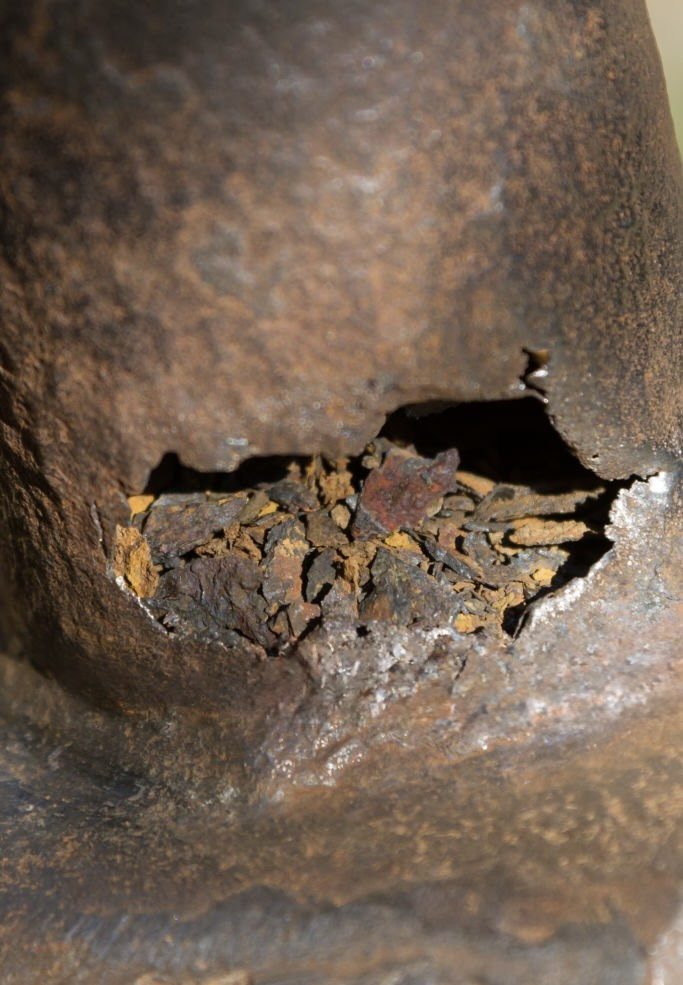
A spot repair fixes a problem in one place. Replacement is for a pipe that has failed in several. If the camera shows a collapse, a belly that holds water, or breaks at joint after joint down the run, you are not looking at a patch job. Patching one section of a pipe that is failing everywhere just moves the next backup a few feet down the line. That pipe is done. The only real question left is how to put the new one in.
A typical case looks like this. A 1950s house in the Valley, original cast iron near the house and clay out toward the street. The camera runs the whole length and the breaks are not in one spot, they are scattered across sixty feet. That line gets replaced, not repaired, because there is nothing sound left to save.
Bursting, when the line is gone
For a full-length replacement, pipe bursting is usually the method. A cable goes through the old line, a bursting head gets attached to a new length of HDPE, and a jack pulls the head back through. The head splits the old pipe outward into the soil and drags the new one in behind it, all in one pass. It works through clay. It works through cast iron. All it needs is a pit at each end. We cover how bursting handles each material in the pipe bursting guide.
Lining, when the pipe can still host one
Sometimes the old pipe is leaking at the joints but still holding its shape. When that is the case, lining beats bursting. A resin-soaked liner goes in, inflates against the wall, and cures into a new jointless pipe inside the old one. No seams means nowhere for roots to get back in. It is faster and needs even less access than bursting, with one catch: the host pipe has to be sound enough to take it, and the camera is what confirms that. The full process is in the CIPP lining guide.
And when we tell you to dig
Some lines cannot go trenchless, and pretending otherwise just wastes your money on a method that was never going to work. A pipe that has separated and shifted sideways, which happens on hillside lots where the ground moves, will not take a bursting head cleanly. A line that has collapsed flat gives a cable nothing to follow. In those cases a targeted dig is the right call, and the footage shows you exactly why. We would rather lose the no-dig sale than sell you one that fails.
The permit, and the part of the line you forget about
A lateral replacement in LA needs a permit. If the work runs into the public right of way, the stretch from your property line out to the city main, it may also need an encroachment permit from the Bureau of Engineering. We handle both and schedule the inspection. You will know up front whether your job reaches the right of way, because that one detail changes both the timeline and the bill. The permits guide walks through who is responsible for what.
What it runs
Most trenchless replacements in LA land between six and twelve thousand dollars. Short bursting runs come in under that. Deep lines, long runs, hillside access, and right of way work push it up. Whatever the number is, the estimate breaks it into parts you can see: the method, the footage, the permit, the access pits, the backfill, the compaction, the restoration. A single lump sum is where the padding hides, so you will not get one from us.
What this usually looks like
A 1926 Spanish house in Hancock Park, original clay all the way out to the street. The line had backed up twice in a year, and the quote in the homeowner’s hand was just under fifteen thousand for a full replacement. The camera told a more complicated story. Most of the run was tired but intact. The real damage was a forty foot stretch under the parkway where the clay had separated joint after joint and roots had taken over. That section was genuinely gone. The rest did not need touching. We burst the bad run and left the sound pipe alone, and the number came in well under the replacement quote.
That is the pattern on these older central LA homes. The whole lateral rarely fails at once. One stretch goes first, usually the oldest or the most root-exposed, and a replacement quote treats the entire line as if it were all that bad. The camera is what separates the part that has to go from the part that is fine.
Get a straight answer
Give us your pipe length and material and you will have a ballpark in about a minute. Already holding a replacement quote? Send it over with any footage you have and we will read it back to you honestly, method and all. Or ask for a camera inspection and you will know exactly what your line needs, usually within one business day.
Related reading
- Repair or replace your sewer line: how we decide
- Pipe bursting, explained
- CIPP pipe lining, explained
- What sewer replacement costs in Los Angeles