If you jet the roots every year, you do not have a root problem. You have a joint problem.
Here is the pattern almost nobody explains. The line backs up, someone jets it, flow comes back, everyone is happy. Twelve to eighteen months later it backs up again. Same spot, same roots, same bill. The roots are the symptom. The open joint they keep growing through is the actual problem, and jetting does not touch it.
That does not mean jetting is useless. It means you should know what it fixes and what it only postpones.
What you are seeing
Slow drains. Gurgling. A backup that clears partway and returns. On camera, a mass of fine roots filling the pipe like a net, almost always at a joint rather than mid-pipe. That location is the tell. Roots do not drill through sound pipe. They find a gap that is already there.
Why they are in there at all
A clay joint separates a little, a trace of moisture seeps out, and a root tip three feet away grows straight for it. Once a single tip is through the gap it thrives in the constant water and branches into the mass that chokes your flow. The separation comes first, the roots come second. The full mechanism is in the guide to why LA lines fail.
How jetting clears it
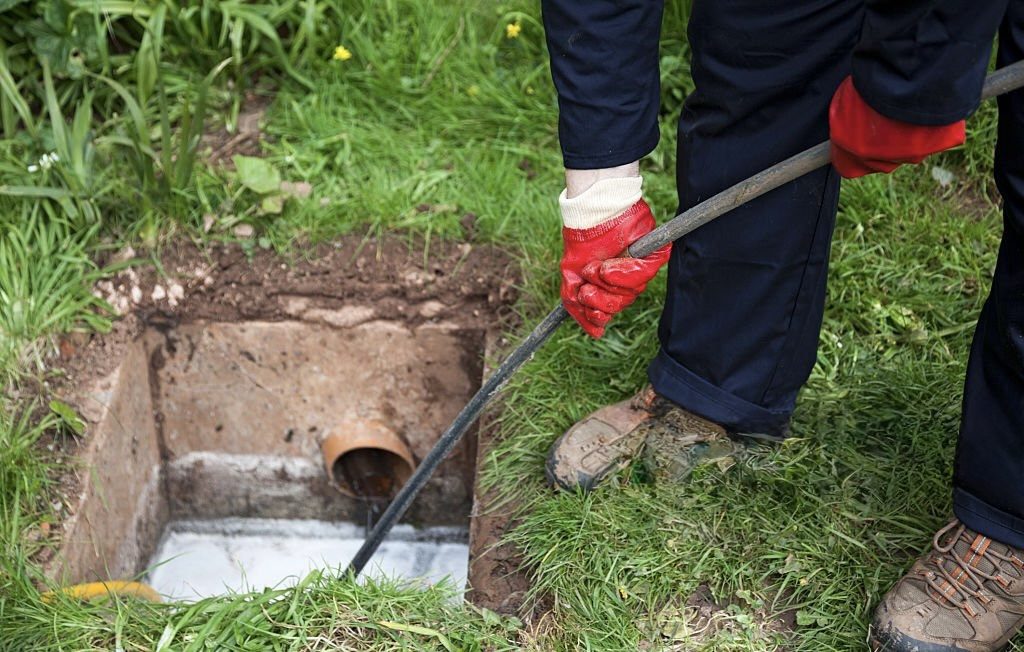
A hydro jetter sends water through a specialized head at very high pressure, and the back-facing jets scour the pipe wall clean while pulling the hose forward. It cuts through a root mass far more completely than a mechanical snake, which tends to bore a hole through the center and leave the rest. After a proper jetting the pipe is genuinely clear, wall to wall.
The honest part: clear is not closed
Jetting removes the roots. It does not seal the joint they entered through. That gap is still open the day we drive away, and the roots will find it again on their own schedule. Anyone who jets your line and implies the problem is solved for good is not being straight with you. Clearing flow and closing the entry point are two different jobs.
When to stop jetting and line the joint
Once you have jetted the same spot twice, the math turns. A short liner across that joint removes the gap permanently, and the roots have nowhere left to enter. It costs more than another jetting today and far less than jetting every year for a decade. The lining guide covers how a sectional liner ends the cycle.
When jetting alone is genuinely the right call
Sometimes it is the whole answer. A grease or sludge blockage with no root involvement. A one-time clog. A line you are clearing to get a clean camera read before deciding anything. In those cases jetting fixes the actual problem and there is nothing left to line. The footage tells us which situation you are in before we recommend spending a dollar more.
What this usually looks like
A 1928 home in the Mid-City area, jetted three times in four years by three different companies, each visit treated as a fresh clog. The footage showed the same separated clay joint each time, roots back through the same gap. That homeowner did not need a fourth jetting. A sectional liner across the joint ended it. Three-time repeat jettings on an old clay line almost always trace back to one joint nobody ever sealed.
What it costs
A hydro jetting is one of the lower-cost services we offer. A sectional liner across a problem joint costs more upfront and replaces an open-ended series of jettings. The estimate makes both options visible so you can decide whether you are buying time or buying the end of the problem.
Get a straight answer
Tell us how often it backs up and we can usually say whether you have a clog or a joint. Send footage for a free read. Or book a camera inspection and jetting together, and you will see the joint behind the roots, usually within one business day.
Related reading
- Why LA sewer lines fail
- CIPP pipe lining, to close the joint for good
- Sewer line repair, when the failure is local
- Sewer camera inspection: see the footage first